
Frequently asked questions
Answers about booking, life on board, costs and cancellation.
Booking and planning
How do I book a sailing charter with you?
Booking is simple: contact us (through the online form or WhatsApp) with your preferred dates, the number of people and the type of boat you'd like (sailboat or catamaran). We'll get back to you within a few hours at most with an offer and availability for those dates. If the offer suits you, you can ask us to hold the boat provisionally for a week (a so-called option) while you finalise your plans. Once you confirm that you want to book, a deposit is required to make the booking final. You'll then receive a unique booking code and all further information about payment and the charter.
How far in advance should I book?
We recommend booking as early as possible, especially for the peak summer season. For departures in July and August (when demand is highest), it's best to book 6 to 10 months ahead to secure the dates you want. Outside the peak season (spring or autumn), booking 3 to 6 months ahead is usually enough, as it's less busy and more boats are available. Of course, you can always contact us last-minute too: if we can, we'll do our best to find free dates, but bear in mind that the choice will be more limited.
In which months do you run sailing trips? Do you sail outside the summer?
Our sailing season in Greece runs from early May to mid or late October. During this period the weather is right for sailing and enjoying the sea. May and October can be cooler, with colder water for swimming, so in bad weather we may lose a day or two of sailing at either end of the season. Still, many people love the early and late season because it's less crowded: even if the weather isn't perfect every day, the atmosphere can be romantic, and you'll enjoy life on board while we wait for better weather in a safe harbour. We don't run trips outside these months because of the unfavourable winter weather.
Which destinations and sailing routes do you offer?
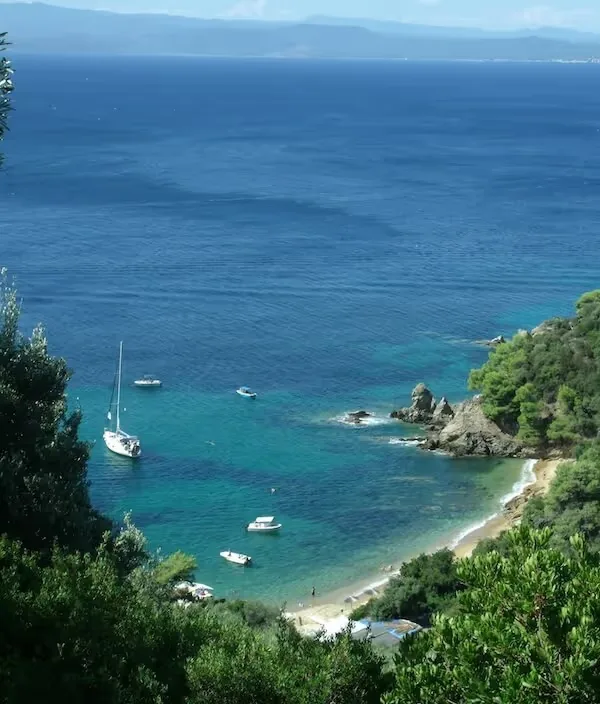
Our sailing is focused above all on the beautiful Sporades islands, because that's where our base is. This group of islands offers a perfect mix of unspoilt nature, turquoise lagoons, green landscapes and quiet harbours. We most often visit islands such as Skiathos, Skopelos and Alonissos, along with many hidden coves that are ideal for swimming and relaxed sailing. The Sporades are a great choice for families and groups of friends alike, with a balance of authentic places and beautiful seascapes.
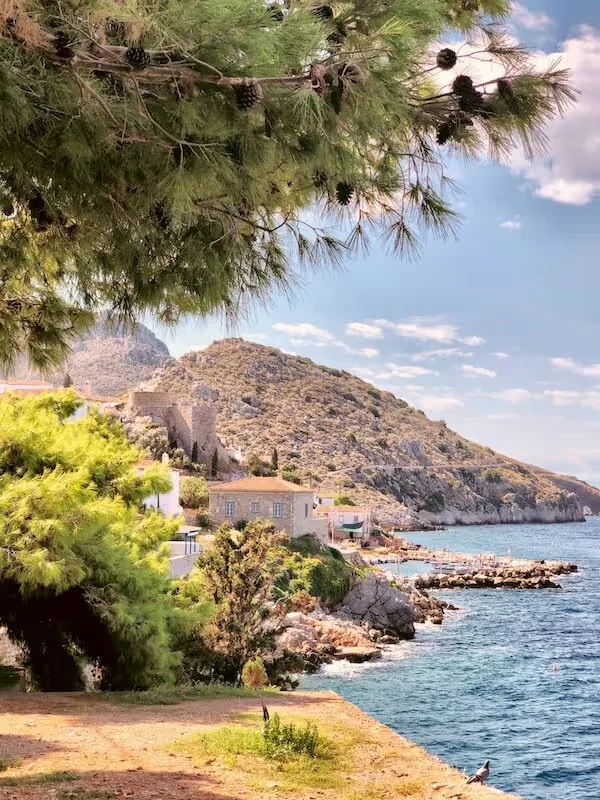
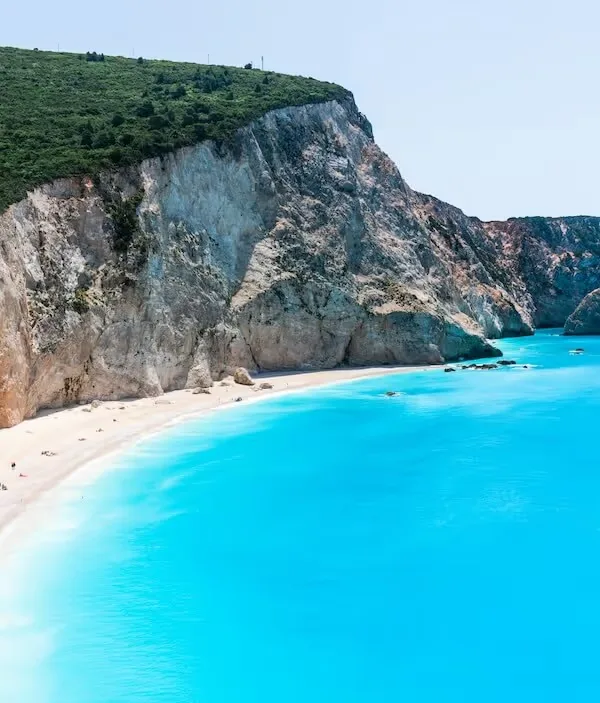
Besides the Sporades, on request we also organise trips around the Saronic Gulf, perfect for shorter, calmer routes from Athens, and among the Ionian Islands (Lefkada, Corfu, Zakynthos), known for their emerald water and gentle winds.
We can also put together a fully tailored trip, wherever you'd like to go. In these three regions, though (the Sporades, the Saronic Gulf and the Ionian Islands), we have a well-established network of trusted partners and a fleet at our disposal, which lets us offer the highest level of organisation and flexibility.
How long is a sailing trip?
A standard private charter lasts 7 days (and 7 nights), from Saturday to Saturday. A week like this usually lets you visit around 5–6 different islands or places, with enough time to enjoy each one. Boarding is usually in the afternoon of the first day and disembarking in the morning of the last day, although we try to set sail as early as possible so you can make the most of your time at sea.
Are the trips private for our group, or will we share the boat with other guests?
All our trips are private charters, which means that when you book, you get the whole boat just for your family or friends. You won't share it with strangers: it will be just you on board, plus the crew of course (the skipper and, if needed, additional staff). This gives you complete privacy, flexibility and a personal experience: the route and pace are tailored to your group alone, and the crew is there for you. If you'd rather join another group, we can recommend cabin charters or shared trips with other organisers, but our own offer is private charters only.
What is the maximum number of people on a trip?
That mainly depends on the size of the boat you choose. The typical sailboats in our fleet take around 7 to 12 guests, as they have 3–5 double cabins. Catamarans can comfortably take 10–12 guests, because they are wider and have more space. When planning, we'll recommend the right boat for the size of your group. Please note that, for comfort and safety, we never exceed the maximum number of people the boat is certified for. When you contact us, try to give us as exact a number of people as you can, so we can find a suitable boat and comfortable accommodation for everyone.
Can we choose the route and destinations ourselves?
Yes, the itinerary is flexible and we plan it together with you. Before the trip we'll listen to what you'd like (quiet coves or livelier places, historic sights, particular islands you want to see and so on) and suggest a route based on that. Of course, we also have to take the weather and safety at sea into account, so the skipper will give you an expert view of what's feasible. Our advice is not to try to see "everything at once": Greece has more than 2,000 islands, and it's impossible to visit a lot of them in one week. Rather than rushing to tick off as many places as possible, it's better to relax and enjoy each destination. The quality of the time you spend on an island or in a cove matters more than the number of places. We can adjust the itinerary as we go: if you particularly like somewhere, we can stay longer, or the other way round. It's important to us that the pace of the trip suits you.
Can I go sailing if I have no sailing experience or licence?
Absolutely! You don't need any sailing experience or a skipper's licence for our trips, because they are crewed charters. This means you have an experienced, professional skipper (captain) who sails the boat, navigates and takes care of everything technical. You and your group can relax and enjoy yourselves without worrying about handling the boat. Even experienced sailors often hire a local skipper for a more relaxing holiday: a local captain knows the area, the weather and the best harbours, which adds to the safety and quality of the trip. In short, no previous knowledge is needed, just a taste for adventure at sea.
What is included in the charter price, and what do we pay extra?
Transparent pricing is very important to us, which is why we say clearly from the start what is included and what is paid separately. The basic charter price includes: boat hire, all standard equipment on board, the services of a professional skipper, bed linen and towels, cooking gas, the basic safety kit on board and all applicable taxes and VAT. The berth fee in the home marina on the first and last night is also included.
Not included in the price are the following costs, which guests usually cover: fuel (charged according to actual use), water and electricity in marinas during the trip, harbour fees in other ports, the final cleaning of the boat, and food and drink for guests during the trip. In our experience, these costs usually come to around €300–700 per week for the group, depending on the route and your habits.
💬 Important note: in line with international charter practice, guests also cover the skipper's food and drink, as the skipper is part of the crew living on board for the whole trip. The skipper eats the same as the guests: whether you cook on board or go to a restaurant, count on the skipper joining the group for meals. This is the usual standard in the charter industry and part of the food budget you plan for.
You can buy food and drink before departure (with our help organising it and drawing up a shopping list), or we can arrange provisioning in advance to suit you. We'll set out all the details of what's included and the extra costs precisely when you book, so you know exactly what to expect.
On board and the sailing experience
What clothes and gear should I bring?
We recommend light, comfortable summer clothes, swimwear and sun protection. Be sure to pack a high-SPF sun cream, sunglasses and a cap or hat, as the sun at sea is very strong. It's also good to have a light jacket or sweatshirt for windy evenings on the water. Many people forget beach towels, so remember to bring them (we provide bed linen and small shower towels, but beach towels are up to you). Choose footwear suited to a boat: sandals or soft-soled, non-slip trainers are best, and high heels are definitely best left at home. Pack everything in a soft bag or backpack rather than a hard suitcase, as storage space in the cabins is limited. Apart from your own clothes and toiletries, you don't need to worry about anything else: our boats are equipped with all the basics (bed linen, crockery, basic toiletries and even a hairdryer on request). And of course, don't forget your camera or phone: you'll capture some wonderful moments at sea!
What is a typical day on a sailing trip like?
A day on board is relaxed, but with enough going on to see plenty.
In the morning we usually have breakfast on board in a quiet harbour or cove. After breakfast we set sail for the next destination; sailing time between islands depends on the route and can be anywhere from about 2 to 5 hours. Along the way we usually stop in a beautiful cove so you can jump into the sea for a swim. Somewhere en route we also make a light lunch or a snack on board.
We then carry on to the day's destination and arrive at the harbour or cove in the afternoon (around 3–4 pm). That leaves you plenty of time to spend the afternoon and evening ashore: you can explore the island, visit beaches or sights, or wander around picturesque villages.
Dinner is usually ashore, in local tavernas or restaurants, so you can taste authentic Greek cooking (which is part of the experience). Our skipper will be happy to recommend good restaurants and help you book at popular places if needed. After dinner you can enjoy the island's nightlife and relax over a drink or some music, as many islands have a lively atmosphere for those who want to make a night of it.
The next morning we set off on a new adventure to the next destination, so every day brings something new while you fully unwind to the rhythm of the sea.
Is sailing safe, and what safety measures are there on board?
The safety of our guests is our top priority. Although a sailing holiday is a bit of an adventure by nature, it isn't dangerous as long as you respect the rules and the sea.
At the start of the trip the skipper gives all guests a detailed safety briefing. You'll be shown the safety equipment, how to move around the boat, what to do in an emergency and the basic rules of behaviour at sea. All the required safety equipment is on board (a life jacket for everyone, including children's sizes, harnesses, flares and a first-aid kit).
Our boats even exceed the minimum legal requirements for safety equipment, and all are insured against accidents, third-party damage and the like. They are also maintained to a very high technical standard: over the winter we put a lot of care into servicing and inspections, to avoid any breakdowns or unpleasant situations during the season.
An experienced skipper takes care of navigation and keeps an eye on the weather: we follow the forecasts and, if bad weather is coming, adjust the route so that we're always in a sheltered harbour or a safe area. We don't set out in stormy conditions; specifically, we don't sail when the wind reaches near-gale strength (Force 7, around 30 knots or more), except perhaps for a short downwind leg in a sheltered area if the skipper judges it to be completely safe.
We also don't sail at night except in an emergency: every day we anchor or moor before dark, for your safety and comfort. If you follow the crew's instructions and take basic care, sailing is a very safe kind of holiday. Relax: a professional takes care of your safety, and you enjoy the sea with complete peace of mind.
Is sailing suitable for children, and are they safe on board?
Families with children are more than welcome! We think sailing is one of the best choices for a family holiday. Children love being on a boat: for them it's a real little adventure where they can learn about the sea and nature, swim in beautiful places and spend quality time with their parents.
We have experience with our youngest guests and have no strict age limits: even babies and small children can go sailing with proper supervision. Of course, children's safety is a shared responsibility. On board we have children's life jackets and guardrails, and if you'd like, we can fit a safety net along the guardrails that stops little ones slipping through the gaps and gives parents extra peace of mind.
While sailing, children usually stay with you on deck, and we recommend keeping an eye on them at all times, just as you would anywhere else. Parents must supervise their children at all times on board, especially when they're playing in the cockpit, on deck or in the water. The skipper will also give advice (e.g. how far they can go with water toys, whether they can jump off the boat, and so on) depending on their age and how well they swim.
In practice, children get used to the boat very quickly and usually enjoy it more than anyone, but it's important that the rules are followed (e.g. no running on a wet deck). With the right precautions, sailing is safe for children and gives them memories they'll never forget. Many of our guests tell us that after this holiday their children love the sea more than ever!
Can we take part in the sailing and learn something about handling the boat?
Of course! If you're curious about how everything works on a sailboat, our skippers will gladly show you the basics. You can learn to hold a course (direction), help hoist the sails or tie up the boat in harbour. Guests are welcome to take part in the sailing, but it's entirely voluntary.
In some situations, though, such as mooring in harbour (throwing a line) or anchoring (dropping the anchor), the skipper may ask you for a quick hand. It's very simple and doesn't need any previous skills. The skipper will explain clearly beforehand what you need to do, show you how everything works and guide you through the whole thing, so you feel completely confident. In practice, it's a small moment of teamwork that many guests find a fun part of the experience.
The skipper is also your guide and host on board, will happily answer any questions and can even teach you basic sailing skills if you're interested. For many guests, especially children or anyone who enjoys learning something new, it's a great opportunity: you'll learn a bit about winds and navigation, and maybe a couple of real sailor's knots. 🙂 All of this, of course, under the watchful eye of the skipper, who makes sure everything is safe.
By the end of the trip you may be pleasantly surprised at how much you've picked up, and you might even want to sign up for a sailing school after this adventure!
What if I'm worried about seasickness?
Believe it or not, seasickness isn't common among our guests, especially because we choose our routes carefully and sail in suitable weather. In the summer months the sea is generally calm in the areas where we sail, so most people have no trouble with nausea.
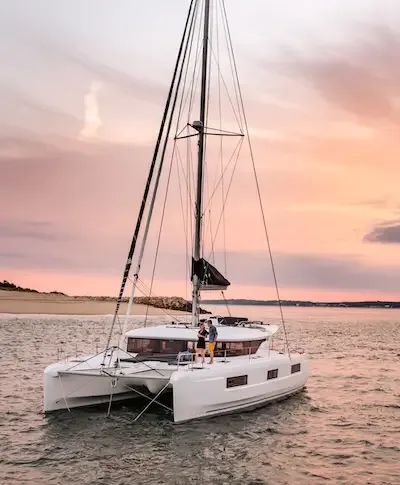
If you know you're prone to seasickness, we can plan the trip on a more stable boat: catamarans, for example, have two hulls and are very stable, heeling and rolling less, so they're an excellent choice for anyone sensitive to motion.
You can also take precautions: we recommend bringing anti-nausea tablets or using natural remedies such as ginger. How you behave on board matters too: stay out in the fresh air on deck as much as possible and look at the horizon, which often helps settle the stomach. Avoid reading or looking at screens while we're in the waves, and keep alcohol to a moderate amount.
Staying hydrated is important: drink enough water throughout the day. We also have special anti-nausea wristbands on board (which can ease symptoms by pressing on acupressure points), so feel free to ask for them. If you do start to feel unwell, the skipper is used to it: we'll slow down, change course or let you take the helm for a while (being actively involved often takes your mind off it and eases the discomfort).
In the most popular sailing areas of the Ionian and Aegean, the sea really is mostly calm in the summer months, so the vast majority of guests have no problems at all with nausea and enjoy the gentle rocking of the boat (some even say it sends them to sleep like a baby!).
What are the cabins and facilities like? Will we be comfortable on a sailboat?
Our sailboats and catamarans are designed to be comfortable for a stay of several days. Each boat has several cabins (bedrooms) with beds for two; the cabins are smaller than hotel rooms, but cosy, with ventilation (portholes and hatches) and storage space.
There are also toilets (heads) with showers: usually 2 or 3 on a medium-sized sailboat, shared by the guests. Larger catamarans may have a private bathroom for each cabin. The boat has a galley (kitchen) with a fridge, a hob and a sink, so meals can be prepared on board.
There is also a shared saloon (the indoor living area) with a table and seating, connected to the galley, where you can spend time if the weather outside isn't good. On deck you have space to sunbathe and sit (the cockpit, with benches and a table under an awning).
In short, a sailboat is like a small apartment on the water: it has everything you need to be comfortable, with sleeping cabins, a bathroom, a kitchen and space to relax. Of course, the space is more compact than on land, but it's cleverly used. Electricity and water are limited on board, but they are topped up regularly in harbours (water) and by the engine or generator (electricity). Each cabin has lighting and a fan, and there are sockets on board for charging (see the next question about electricity).
Each of our yachts also has a tender (an inflatable dinghy) with an outboard motor, which the skipper uses to take you ashore when we're at anchor in a cove.
Overall, we try to make you as comfortable as possible: bed linen and towels are provided, there's music (radio or a Bluetooth sound system), a deck shower (with seawater, or sometimes warm water, for rinsing off after a swim), and water sports gear (e.g. snorkelling masks, stand-up paddle boards or similar, available on request).
In the cabins you'll also find sockets (220 V), which work when we're connected to shore power in a marina or through the inverter while sailing. All in all, our guests often tell us they're pleasantly surprised at how comfortable and fun life on board is!
How do food and drink work during the trip? Are meals included?
In the basic offer we don't provide food and drink: you decide what you eat and drink during the trip, which gives you flexibility. The most common arrangement is to have breakfast and a light lunch on board, and dinner in restaurants ashore when we stop in a village or harbour.
Before departure we can help you buy supplies for breakfasts, snacks and drinks (you can send us a shopping list in advance; we'll organise the supplies and everything will be waiting for you on board). Then in the morning you can enjoy coffee and breakfast on deck while anchored in a beautiful cove. Many of our skippers are very resourceful, so they may even make you a local salad or some nibbles to go with the wine.
For dinner we recommend going ashore: the Greek islands are famous for their excellent tavernas and local food, and it would be a shame to miss out. The skipper will recommend the best tavernas wherever we are and can also book a table in advance for your group on busy evenings. Of course, it's your choice: if you'd ever like to stay in a quiet cove and have dinner on board at sunset, that's possible too.
The galley is equipped for basic cooking, so with the supplies on board you can prepare a meal. If you want a completely carefree holiday when it comes to cooking and tidying up, we can also arrange a hostess/cook for an extra charge: someone who prepares meals and keeps the inside of the boat clean during the trip. This needs to be requested in advance, when you book.
As for drinks, we suggest bringing or buying your favourites before setting sail (or in larger harbours along the way); there's a fridge and a cool storage space on board. Drinking water, juices and snacks are must-haves on the shopping list. In the end, choosing your own food gives you the freedom to enjoy both the islands' cuisine and exactly what you like on board, whenever you want.
Is there electricity and internet on board? How can I charge my phone and stay connected?
Modern sailboats have basic electrical systems, so you can use small devices. On board you always have lighting, water pumps, a fridge and 12 V sockets (like a car charger), and the 220 V sockets work whenever we're connected to shore power in a harbour (or while the inverter or generator is running on larger boats).
So you'll be able to charge phones, cameras, laptops and similar devices every day, either directly (some yachts have USB ports) or when we come into harbour and plug in. We recommend bringing a car charger (12 V) for your phone too, because the 12 V sockets can be used while we're sailing.
As for internet, most of our guests rely on the mobile network. In the areas where we sail, coverage (3G/4G) is generally good most of the time, except perhaps in some very remote coves. For EU citizens, roaming in Greece is charged at the same rates as at home (at no extra cost), so you can use your own plan.
If you're coming from outside the EU or would like a local card, you can buy a Greek prepaid data SIM card (e.g. Cosmote or Vodafone) at very reasonable prices. There are also Wi-Fi networks in many harbours and villages on the islands (cafés and restaurants often offer free Wi-Fi to their customers).
So you'll always have a way to get online, either via mobile data on board or when we're ashore. For anyone who wants a complete digital detox, sailing is the perfect chance to switch off and enjoy nature, but we understand that staying in touch matters these days, so we've made sure that's possible too.
We only ask that you use electricity and water on board sparingly while we're under way (as the tanks are limited); the skipper will give you a short briefing on this (e.g. saving water in the shower and not leaving things switched on unnecessarily), so that each leg to the next harbour goes without a hitch.
What if we run into bad weather or a big storm during the trip?
Sailing is a seasonal activity after all, and most of the time the weather is good, but now and then there may be a windy or rainy day. In bad weather, safety comes first: the skipper follows the forecast and adjusts the sailing plan so that we avoid any risk.
This may mean changing the order in which we visit the islands, or staying an extra day in a safe harbour until the bad weather passes. For example, if very strong wind is forecast, we may stay in a sheltered marina that day and carry on sailing as soon as conditions allow. In general, we don't set out in gale-force wind (Force 7 and above), unless it's possible to sail safely downwind to the next sheltered spot and the captain considers it safe.
Greece has plenty of islands that offer shelter: if a strong meltemi is blowing in the Aegean, we can take cover south of the larger islands, where there are no big waves, and continue the trip once things calm down.
Rain on its own isn't a problem for sailing (the cockpit can be closed in with a canvas cover), but if the weather really spoils the fun, we can always stop in a harbour and use the time to explore the island, visit museums and so on. Bring a light raincoat just in case, as short summer showers can happen.
In short, the itinerary isn't 100% fixed: we'll change it as we go depending on the weather, because we want everyone to be safe and, at the same time, for you to get the most out of your holiday. Sometimes it's exactly these unplanned changes that lead to undiscovered places and lovely surprises!
Costs and cancellation
How can I pay, and which payment methods do you accept?
When you book, you pay 50% of the total price to officially secure your dates, and this advance is paid by bank transfer only, following the instructions we send with the offer. The remaining 50% is paid before boarding; we'll let you know the exact deadline and details. All payments are made in euros (EUR), and if a different payment schedule suits you better, the total can be split into several instalments by prior agreement, to make planning your budget easier. All the prices we quote already include VAT and all taxes required by law, so there are no hidden costs or extra tax obligations.
Do I need to pay a deposit when booking?
Yes, a booking is confirmed by paying a deposit. The deposit is 50% of the total charter price and is paid once you confirm the booking, so that your dates and boat are guaranteed. The booking only becomes official once we receive this payment (until then the offer is not binding). If you book very late, shortly before departure (e.g. less than a month ahead), the full amount must be paid straight away; we'll let you know in good time. The deposit is an advance that confirms your booking is serious, and in return we make sure the boat is no longer offered to other guests for that period. Other deposit terms can also be agreed, depending on the situation and the boat's availability.
Is there a security deposit to pay before the trip, and why?
That depends on the boat you book. For the boats managed by our company (Eleni, New Moon and Nissos Kea), no security deposit is required. However, if you choose a boat from the fleet of one of our partner companies, the standard charter industry practice applies: the security deposit ranges from €2,000 to €5,000, depending on the type and size of the boat. In some cases, instead of the full deposit you can pay a non-refundable damage waiver of around €400, which greatly reduces your liability and risk. We'll state all of this clearly when we send you an offer for a specific boat, so you always know in advance whether a deposit is needed and how much it is.
What is your cancellation and refund policy?
If a booking is cancelled, we take a flexible approach to give guests the best possible solution. If the trip is cancelled for reasons beyond your control, the deposit cannot be refunded, but the full amount of the deposit remains available to you for other free dates, either in the same season or the following year. This way you don't lose any of the money you've paid and can use all of it for a new trip.
What if you (the organiser) have to cancel the trip?
This is extremely rare, but we want to cover it too. Something unforeseen can happen: for example, a serious breakdown or damage to the boat just before departure that can't be fixed in time, or a force majeure event. In such cases, we commit either to providing a suitable replacement yacht of the same or a higher class at no extra cost, or to offering you a full refund of everything you've paid. We'll try to find a solution first: we work with partners and other charter companies and will try to find a similar boat and service for the same dates. If that isn't possible, or you don't want a replacement, we'll refund the full amount you've paid. Unfortunately, we can't cover any other costs you may have had (e.g. flights). But again, this is extremely rare: our fleet is maintained so that problems don't happen, and if a minor fault does occur during the season, we fix it between groups of guests. So far we have never had to cancel a confirmed trip, and we do everything we can to keep it that way.
Are there any extra costs besides the charter price that we should allow for (fuel, fees, etc.)?
The main extras not covered by the charter price are fuel, any harbour fees outside the home port, water and electricity in marinas during the trip, the final cleaning, and your own spending (food, drink, souvenirs, trips ashore). As we explained under "what's included", there are no hidden costs: anything not covered will be made clear to you before the trip. A sailboat uses fuel mainly when there's no wind or when manoeuvring in harbours; average fuel costs for a week are €100–250 for sailboats and €200–400 for catamarans. Water to refill the tank and shore power in marinas cost very little (a few euros per hook-up), and harbours charge for the night by the boat's length (in Greece usually €10–30 per night for an average boat). The final cleaning of the boat is compulsory and paid once, before boarding (typically €200–300 for a medium-sized sailboat), and bed linen and shower towels for all guests are included in the cleaning price. Altogether, these items average around €300–700 per week for the whole group. Note also that in Greece no tourist tax is charged for staying on board. Apart from the cost of getting to the departure port and your personal spending, these items won't add much to the overall cost of the trip, but you should definitely plan for them. You can always contact us for an accurate estimate based on your route.
Are we expected to tip the crew (skipper/hostess)?
Tipping isn't compulsory, but it is common practice in the charter industry and a nice way to reward the crew if you're happy with the service. As in restaurants, a tip is your voluntary way of saying thank you for a job well done: it isn't strictly necessary, but every crew member will really appreciate it. In the Mediterranean the usual tip is around 5–15% of the charter price. The amount depends, of course, on your impression: if you feel the crew made an outstanding contribution to your enjoyment, you might choose a higher percentage; if the service was good but not beyond your expectations, a smaller amount is perfectly fine too. In some other destinations (all-inclusive charters in the Caribbean) the standard is higher (10–20%), but for our area 5–10% is usually enough, while around 15% is a very generous tip. How is the tip given? Usually at the end of the trip, when you disembark, you hand the amount in an envelope to the captain, who shares it equally among the crew. You can tip in cash, in euros. If you only had a skipper with you, it's of course best to give the tip to the skipper directly. To say it again: it's up to you. Our crew are paid for their work, but tipping is a nice custom and an incentive to give their best every time. Either way, what matters most to us is that you're happy; a tip is just the icing on the cake if you feel we've met or exceeded your expectations.
Are my payment and trip insured? Should I buy travel insurance?
Like all serious charter companies, Eolia Sailing has insurance for its boats with reputable insurers. This means the yacht is insured against risks at sea (damage, collisions, fire) and also has third-party liability cover (which includes cover for any injuries to passengers). So as guests you are covered for the skipper's liability for any mistake on our part. However, your personal travel insurance is not included in the price, and we recommend that you have it. Travel health insurance gives you peace of mind in case of illness or injury on holiday. Please note that the crew are not medically trained: although the skipper has basic first-aid training and we carry a basic first-aid kit on board, for more serious medical care we rely on local clinics ashore. That's why it's good to have health insurance that covers you abroad. In short, the yacht and our liability are insured, but for complete peace of mind, consider personal travel insurance. You'll feel more relaxed, and of course we'll help you deal with any services if, heaven forbid, it's needed during the trip. Fortunately, such situations are rare: our guests usually go home tanned and smiling, without any trouble at all.
Are your prices final, and do they include VAT?
Yes, all our charter prices are in euros (EUR) and are final, which means they include VAT and all related fees. So there are no extra taxes when you arrive: the amount we agree covers all statutory charges. The only possible extras are special, non-standard services you might ask for (e.g. an airport transfer), but if so, we'll state that clearly in the offer. Standard harbour fees, environmental fees and the like are either included or minimal, and we covered them in the section on extra costs. Once again, transparent pricing matters to us: no unpleasant surprises and no surcharges in the "small print". When you receive the final offer, you'll know exactly what's included, and we stand behind that price.
Any other advice about payment and planning before the trip?
Of course. Before paying, we recommend that you read the FAQ carefully, and we'll send you a short document with our sailing guidelines. Always feel free to ask if anything is unclear. Also, when paying by bank transfer, check with your bank about fees and processing times (international payments sometimes take a couple of days, so pay in good time). Before the trip we'll also send you our boarding info, with contact details and the exact location of our harbour, plus what to bring and what time to arrive. We want the whole process, from booking to getting back home, to go smoothly, and for you to enjoy every step. That's why we're always available for any further questions. Happy planning, and we look forward to taking you on an unforgettable sailing trip!
Are you ready for your next adventure?
Our mission is to give you a journey full of freedom, comfort and true enjoyment of the sea. Contact us and we will create a route that perfectly reflects your wishes. It will be our pleasure to take you on your next sea adventure.